The Design Ideas Behind Jim Furyk’s First Signature Golf Course

November 3, 2023 | Read Time: 9 minutes
A great player does not automatically become a great course designer. Competitive golf is about solving the questions a course presents; architecture is about deciding what those questions should be in the first place. For Jim Furyk, the move from PGA Tour champion to designer began with decades of observing how courses around the world reward strategy, punish poor angles and, at their best, make players want another round.
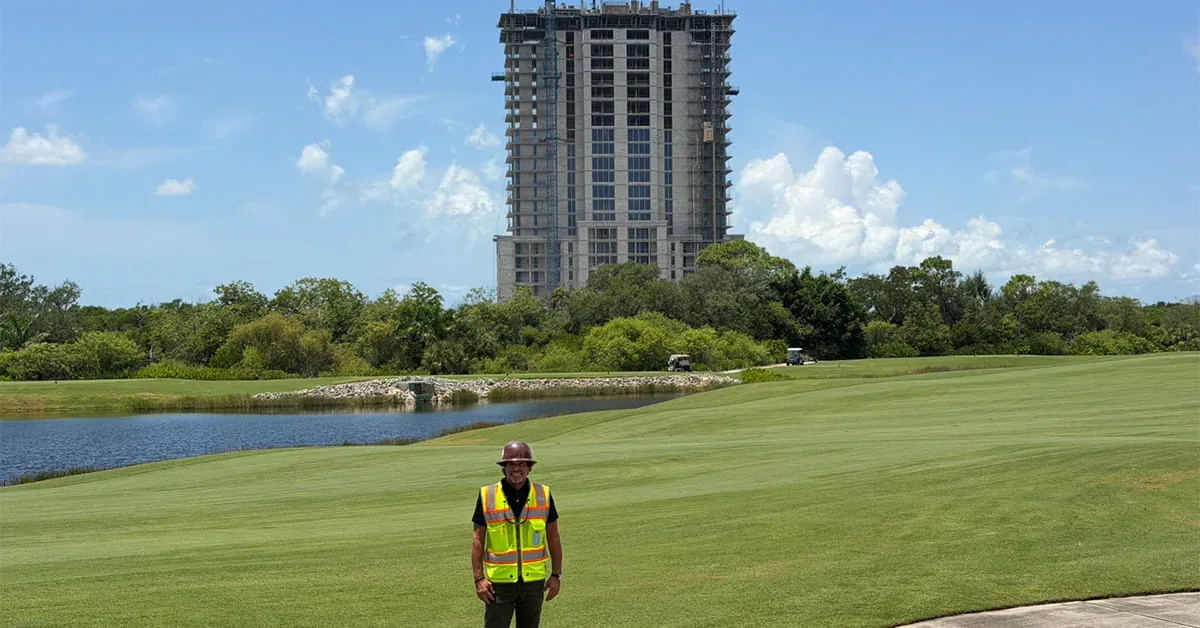
That perspective became the foundation for his first signature course at Glynlea Country Club, within the Wylder master-planned community in Port St. Lucie. Rather than treating Furyk’s name as a shortcut to difficulty, the project was conceived around a more interesting challenge: creating championship-caliber golf that could still feel inviting to players with very different games.
The original Glynlea profile of Furyk’s design philosophy captured the course while that vision was moving from drawings into the landscape. What stands out is how consistently Furyk returns to the same ideas – playability, options, natural character and the belief that strategic golf does not have to be intimidating.
Furyk arrived at architecture with an unusually broad reference library. He grew up around the game under the guidance of his father, who served as a head or assistant head professional at several Pennsylvania courses. At the University of Arizona, Furyk was twice named All-American and helped lead the school to an NCAA golf championship. After joining the PGA Tour in 1994, he built a career that included 17 PGA Tour wins and the record for the lowest single-round score in Tour history. At the time of the original story, he had also been named Vice Captain for the 2023 Ryder Cup and U.S. Team Captain for the 2024 Presidents Cup. His Glynlea profile reflects the competitive record behind the design credit, but the more relevant point for the course is the range of architecture he encountered along the way.
That exposure matters because memorable courses rarely rely on one kind of challenge. Some ask a player to choose an angle from the tee. Others make the green complex the central decision. Some use width to create options rather than simply making the fairway easier to hit. Furyk’s design perspective grew out of seeing those choices in many different settings and then considering which ideas belonged on Florida’s Treasure Coast.
That connection between the golf product and the identity of the larger community is also visible in Cotton & Company’s work with Glynlea Country Club. A signature course can establish a powerful point of distinction, but the lasting value comes from whether the golf experience itself delivers on the promise behind the name.
Furyk’s role was not a solitary exercise in authorship. The course took shape through a collaborative design and construction process, with different specialties helping translate strategic concepts into landforms golfers would eventually see and play.

The relationship with GreenPointe Developers grew in part through Furyk’s connection with Ed Burr, President and CEO of GreenPointe Holdings LLC. Furyk had participated in the Monique Burr Foundation’s Champions for Child Safety Pro Am Golf Tournament. The annual event raises funds for educational programs designed to help students from Pre-K through 12th grade respond to unsafe situations, and the relationship developed through repeated tournaments before the conversation turned toward Glynlea.


The broader course team included veteran golf course architect Michael Beebe and longtime golf course shaper David Johnson. Their involvement speaks to the practical side of architecture: a routing can begin as lines, elevations and intentions, but those ideas ultimately have to be shaped into a landscape where strategy reads clearly from the ground.
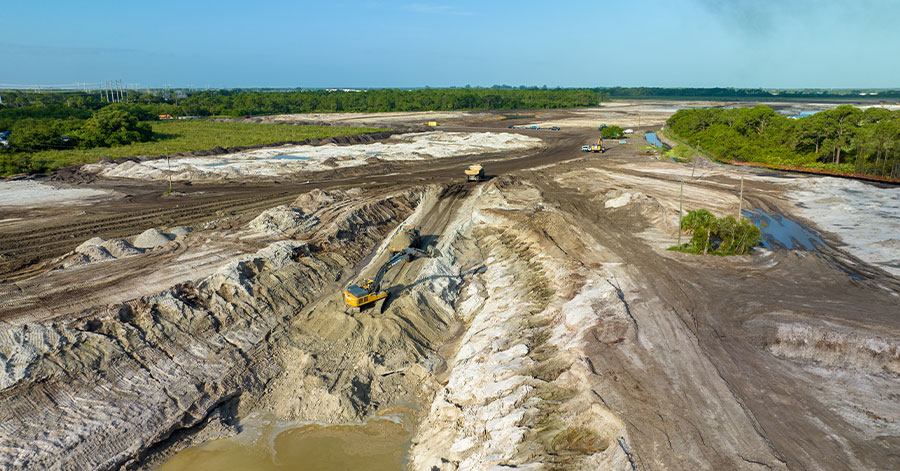
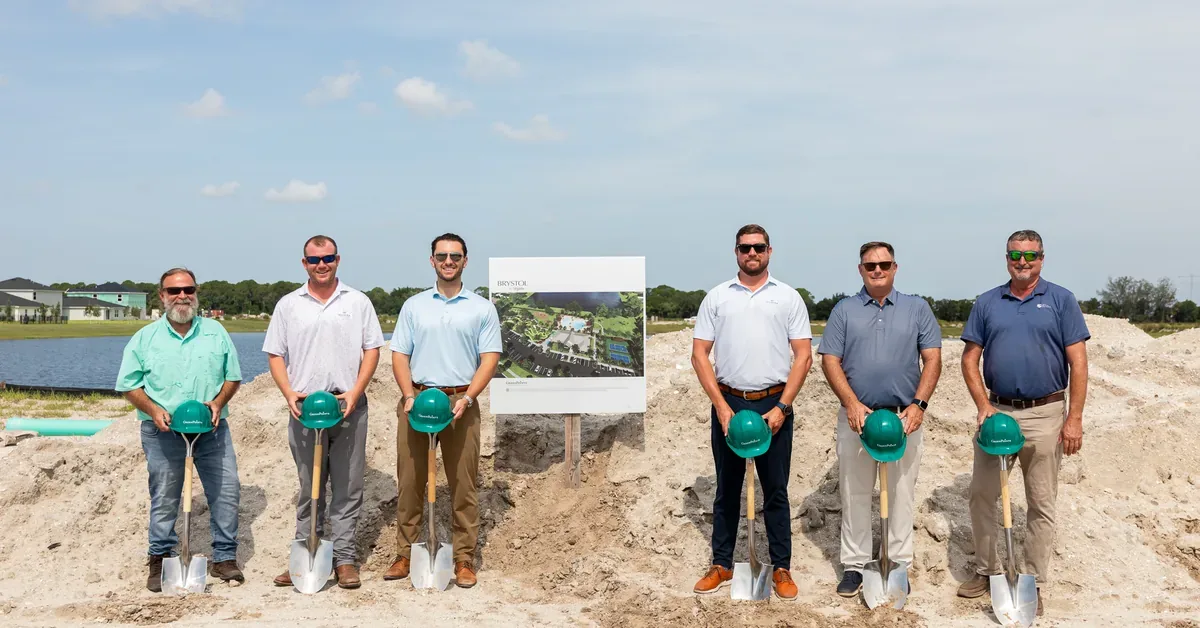
“Mike, David, and I have been putting all our ideas on a piece of paper, two-dimensionally, for years,” said Furyk. “Now, the fun part begins where we get to go out there, play in the dirt, dig around, and create an amazing piece of three-dimensional artwork with our golf course.”
That description gets at one of the most compelling parts of course development. Drawings can establish the logic of a hole, but shaping determines whether the golfer can actually see and feel the decision. A bunker edge, the pitch of a fairway or the way a green opens from one side can turn a concept into something intuitive.
Furyk’s most important design choice may have been philosophical rather than architectural. He did not want a tour player’s name to signal that the course was built only for low-handicap golfers. The Jim Furyk Signature Course at Glynlea was designed around the idea that challenge and enjoyment can coexist.
The planned layout stretched from 4,249 to 6,755 yards across four sets of tees, giving players meaningful control over how much course they wanted to take on. Its par-72 configuration also departed from the familiar four-par-5, four-par-3 pattern. Furyk built in five par 5s and five par 3s, creating more variety in the rhythm of the round.
“The design has five par fives and five par threes. It is a par 72 layout but may be a little different. We’re used to seeing four and four.”
The extra par 5s create opportunities for stronger players to be aggressive, while the par 3s can deliver concentrated tests of distance control and accuracy. Yet the broader goal was not to force everyone into the same version of the course. Multiple tees, varied green sizes and limited forced carries were intended to let different players encounter the architecture at an appropriate scale.
“I think too many people see a tour player as the designer and they immediately think ‘Oh my goodness this course is going to be hard,'” said Furyk. “That’s not the case here. Our goal was to create a fun golf course, a fun atmosphere, and a place where all levels of golfers could come together to enjoy the game of golf.”
That emphasis on shared enjoyment fits a broader shift in the modern private club experience, where the quality of golf still matters deeply but the ability for more members to participate comfortably can be just as important to the life of the club.
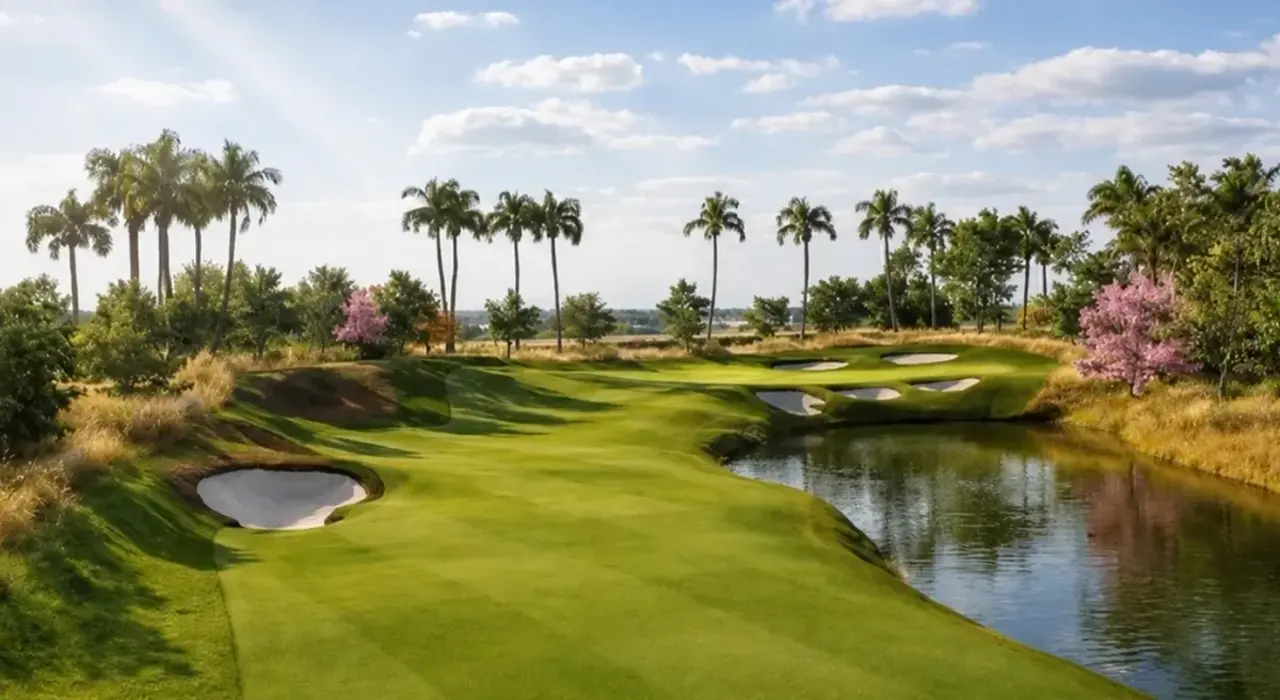
The course’s strategic language becomes clearer in the details. Furyk did not describe bunkers simply as penalties to avoid. He viewed them as visual and tactical guides – features that could suggest a preferred line, shape the angle of an approach and reward a player who understood what the hole was asking.
Green design followed the same logic. Smaller, more protected targets could make shorter holes demand precision, while larger greens on longer holes could create additional room for recovery, chipping and putting. Keeping forced carries to a minimum on many mid- and long-length holes preserved options for players who preferred to run the ball or approach from a safer route.
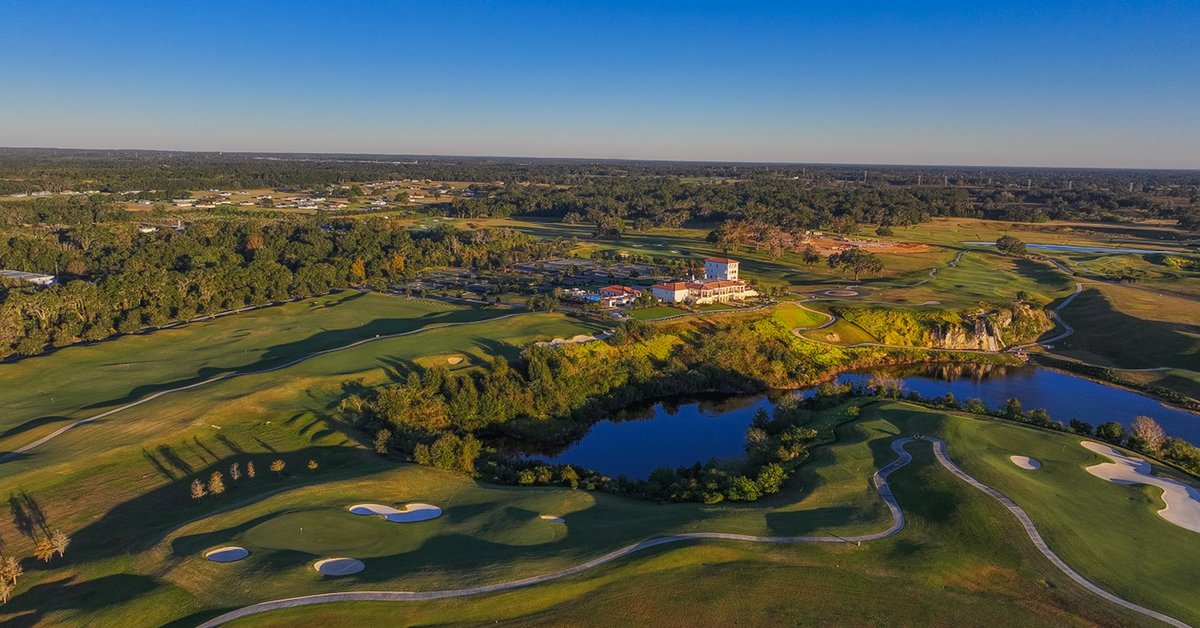
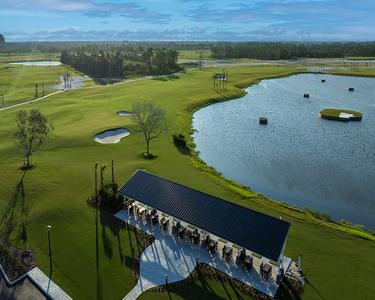
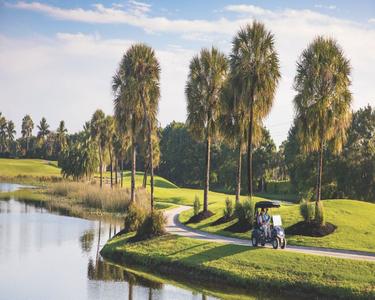
The natural setting was equally important. Rather than clearing away the property’s existing character, the design sought to retain scrub pine and use vegetation, bunkering and subtle land movement to create definition. The result Furyk described was not scenery added after the strategy, but landscape working as part of the golf itself.
“The property has a lot of scrub pine that we’re going to save for the course,” said Furyk. “We’ve layered the bunkers and organized the trees in a way that creates some land movement and gives the golfer a pleasant feel. Whether on the golf course or the homes surrounding it, we want residents to enjoy its beauty from every angle.”
Yes. Glynlea identifies its championship course as Jim Furyk’s first signature course. The design draws on his experience playing around the world while emphasizing strategy, playability and long-term enjoyment.
The layout was planned from 4,249 to 6,755 yards with four sets of tees, giving golfers different ways to experience the same architecture. Furyk also emphasized limited forced carries, varied green sizes and multiple strategic options so the course could challenge stronger players without making newer or higher-handicap golfers feel excluded.
Furyk worked with a team that included veteran golf course architect Michael Beebe and experienced golf course shaper David Johnson, alongside GreenPointe Developers. Their collaboration moved the course from two-dimensional planning into the shaping and construction of the finished landscape.
Bunkers were intended to guide strategy and influence preferred approach angles rather than function only as hazards. The design also sought to preserve scrub pine and use trees, bunkering and land movement together, allowing the natural character of the site to become part of both the golf experience and surrounding views.
Original Article from Glynlea
Copyright © 2026 LyfeRocks. All rights reserved.