10 Places That Capture the Character of Stuart, Florida
June 9, 2025 | Read Time: 10 minutes
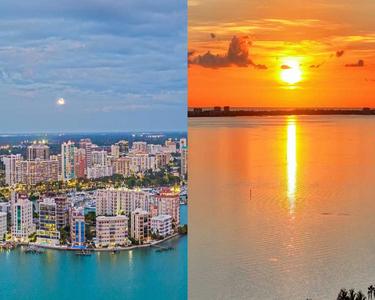
Stuart rewards a camera at almost every turn, but not always for the same reason. One frame might be all river reflections and bridge lights; another might be a century-old theater marquee, a downtown mural or the Atlantic opening beyond the St. Lucie Inlet. The appeal is less about finding one postcard view than noticing how many versions of the Treasure Coast fit into a relatively compact part of Florida.
That range is what gives Stuart, Florida its visual personality. The city moves between waterfront boardwalks, historic streets, public art and wide-open coastal landscapes, while nearby Hutchinson Island and Sailfish Point bring the ocean, inlet and golf-course edge into the same story.
Sailfish Point’s original June 9 photo guide identifies 10 places members return to with a camera. This Lyfe Rocks version follows the same route, keeping the landmarks and details intact while focusing a little more closely on what makes each stop photograph differently — and why the best image often depends as much on timing as location.
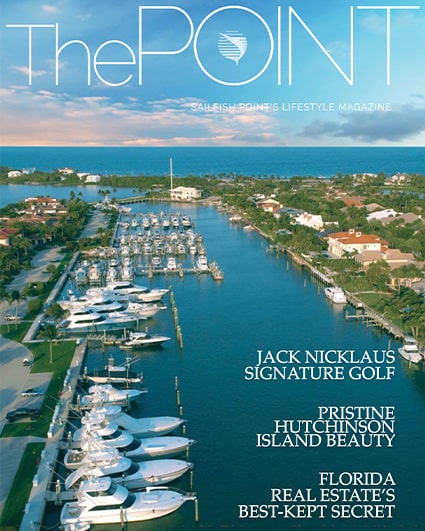
The collection also shows why visual storytelling matters to coastal communities. Cotton & Company’s work with Sailfish Point has long centered the community’s unusual meeting of ocean, inlet, river, golf and residential settings, while its private club industry guidance emphasizes how lifestyle imagery helps people understand a place before they ever experience it in person.
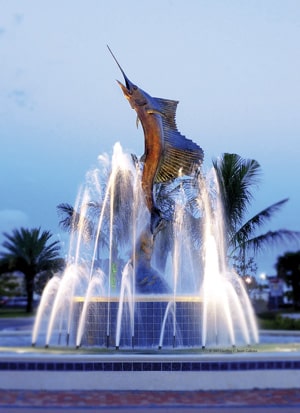
1. Start With Stuart’s Sailfish Landmark
The Sailfish Fountain makes a natural first frame because it immediately identifies the city. The 19-foot-tall bronze sculpture by Geoffrey C. Smith pays tribute to Stuart’s identity as the “Sailfish Capital of the World,” turning a local symbol into a piece of public art that works both as landmark and introduction.
Light matters here. The original guide recommends golden hour, when lower, warmer sunlight brings out the contours of the sculpture and softens the surrounding setting. A tighter composition can emphasize the sailfish itself; a wider one can place the fountain within the tropical landscape and give the image more context.
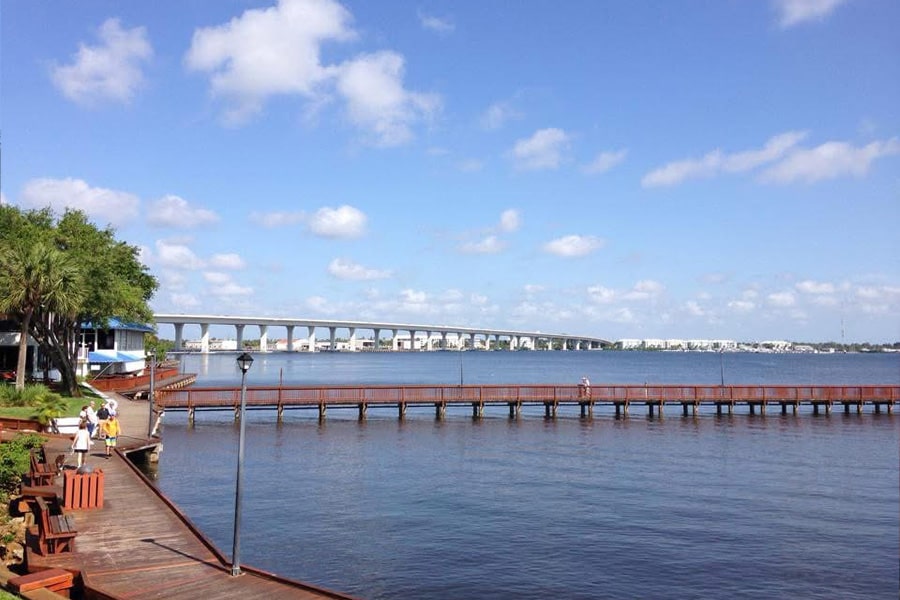
2. Follow the Riverwalk as the Light Changes
Along the St. Lucie River, the Stuart Riverwalk offers one of the easiest places to build several different images from the same walk. Sailboats, boardwalk railings, open water and occasional dolphin sightings can all become part of the frame, while morning light and golden hour create very different moods.
The Riverwalk is also more than scenery. Its waterfront stage hosts the weekly Rock’n Riverwalk concert series, giving the area another layer of movement and local life. That mix makes it useful for photographers who want more than an empty landscape: the river can remain the backdrop while music, strolling visitors and the boardwalk create a sense of place in the foreground.
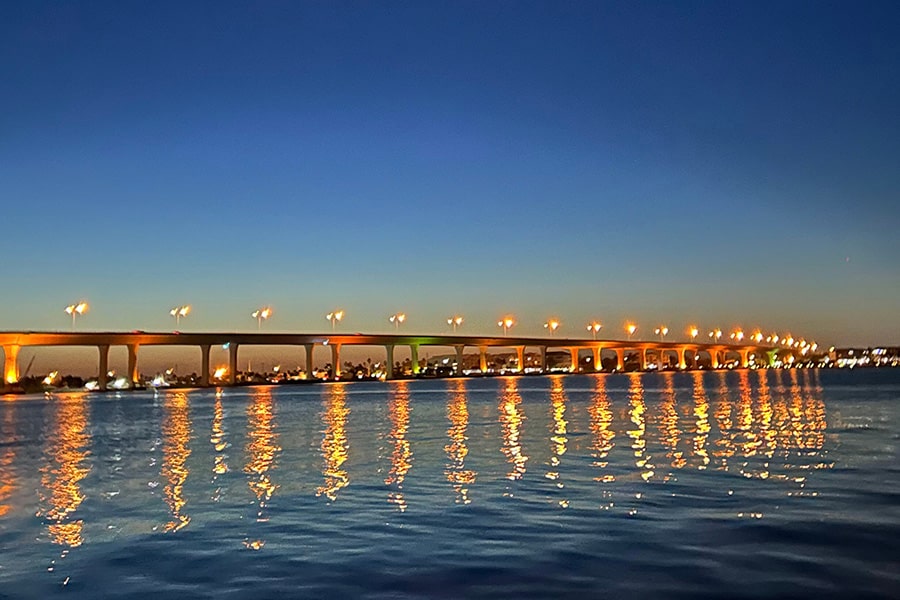
3. Frame the Roosevelt Bridge From the Waterline
The Roosevelt Bridge gives Stuart a more graphic kind of photograph. Its long curve across the St. Lucie River reads clearly from a distance, but the original guide points to the riverbank beneath the bridge as the more compelling position.
From there, the structure becomes a study in geometry, reflection and contrast. After dark, the bridge lights stretch across the water and create a second version of the span below the surface. It is a useful reminder that some of Stuart’s best photographs are not only about the subject itself, but about what the water does with it.
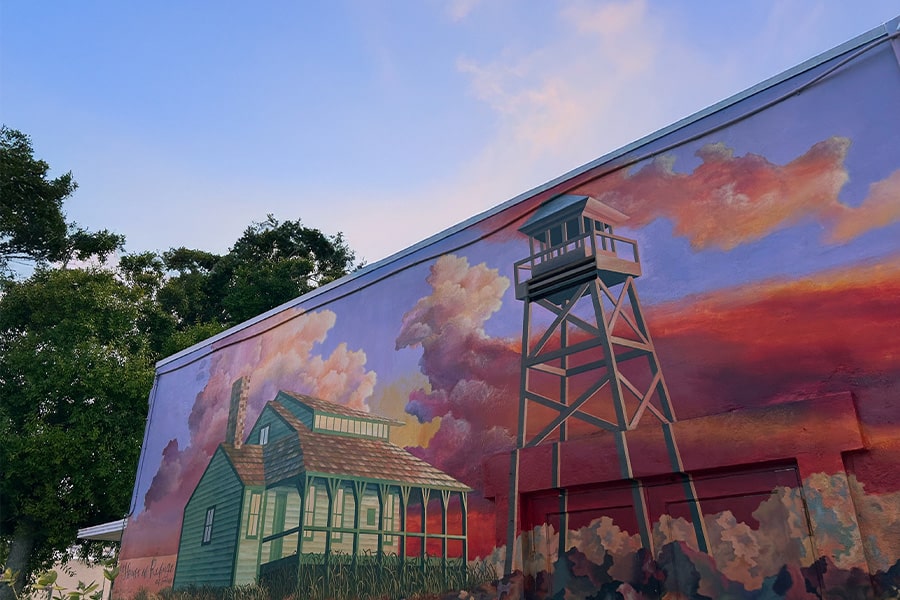
4. Find Stuart’s History on Downtown Walls
Downtown Stuart’s murals and mosaics shift the visual story from water to local history. Eighteen works are spread around the city, and the collection has helped make Stuart a notable stop on the Florida Mural Trail. Together they trace subjects ranging from the area’s pineapple-farming beginnings to its long maritime identity.
The advantage of photographing public art is that the surrounding street can be part of the composition rather than something to crop away. Architecture, trees, sidewalks and evening light can show how the work sits within downtown, creating an image that records both the mural and the place that gives it meaning.
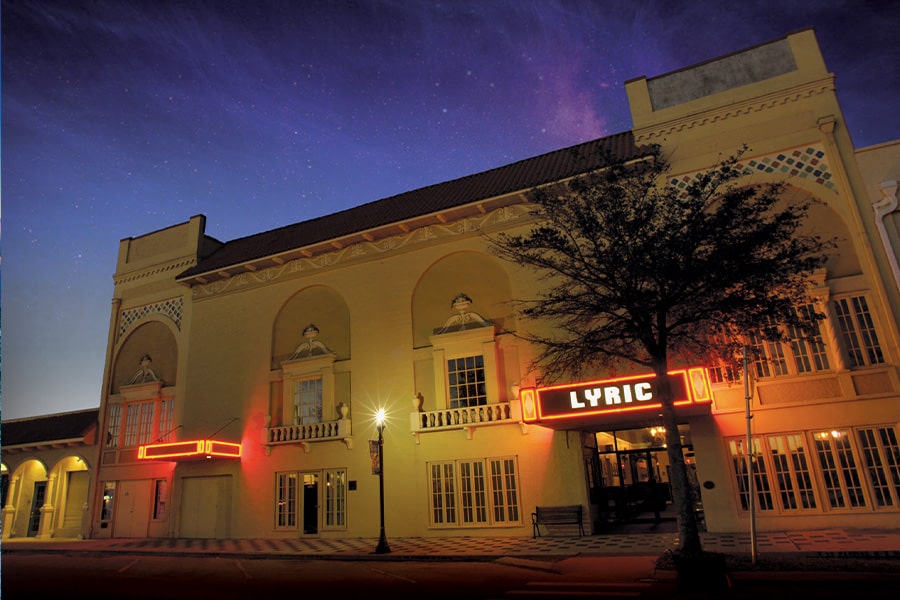
5. Catch the Lyric Theatre After Dark
The Lyric Theatre brings a different era into the route. Opened in 1926 as a silent movie house, the building remains one of downtown Stuart’s most recognizable cultural landmarks. Its vintage exterior, architectural details and illuminated marquee make it especially photogenic as daylight gives way to evening.
A daytime image can focus on form and façade; after dark, the warmer lights and surrounding streets add atmosphere. The theater’s continuing calendar of concerts, plays and musicals also keeps the building from feeling like a static historic artifact. It remains part of Stuart’s cultural life, which is why the best photograph can feel both nostalgic and current.
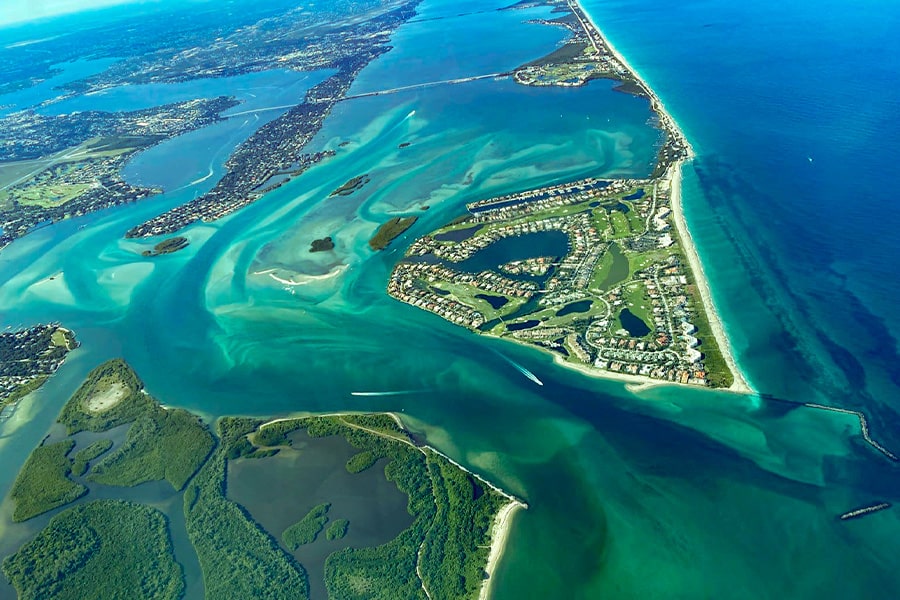
6. Photograph the Inlet Where River Meets Atlantic
At the southern end of Hutchinson Island, the St. Lucie Inlet opens the scene dramatically. Here the river system meets the Atlantic, with shifting tides, rugged shoreline and broad coastal views creating images that feel less composed by the city and more shaped by water and weather.
Sunrise is the moment highlighted in the original guide. Early light reveals the contours of the coast without flattening the water, and changing conditions can alter the scene from one morning to the next. For a photography route centered on Stuart, the inlet is where the scale suddenly expands.
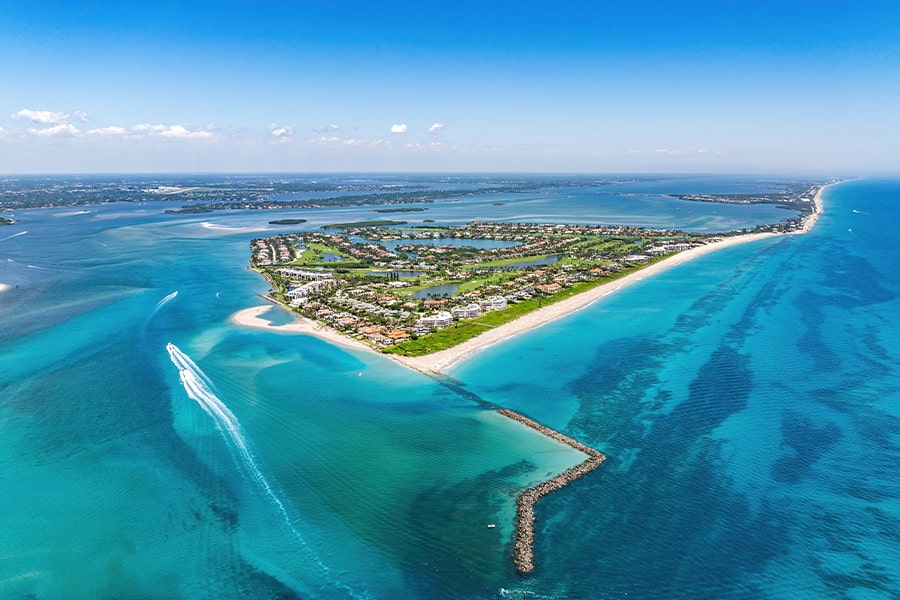
7. Look East From Sailfish Point Beach
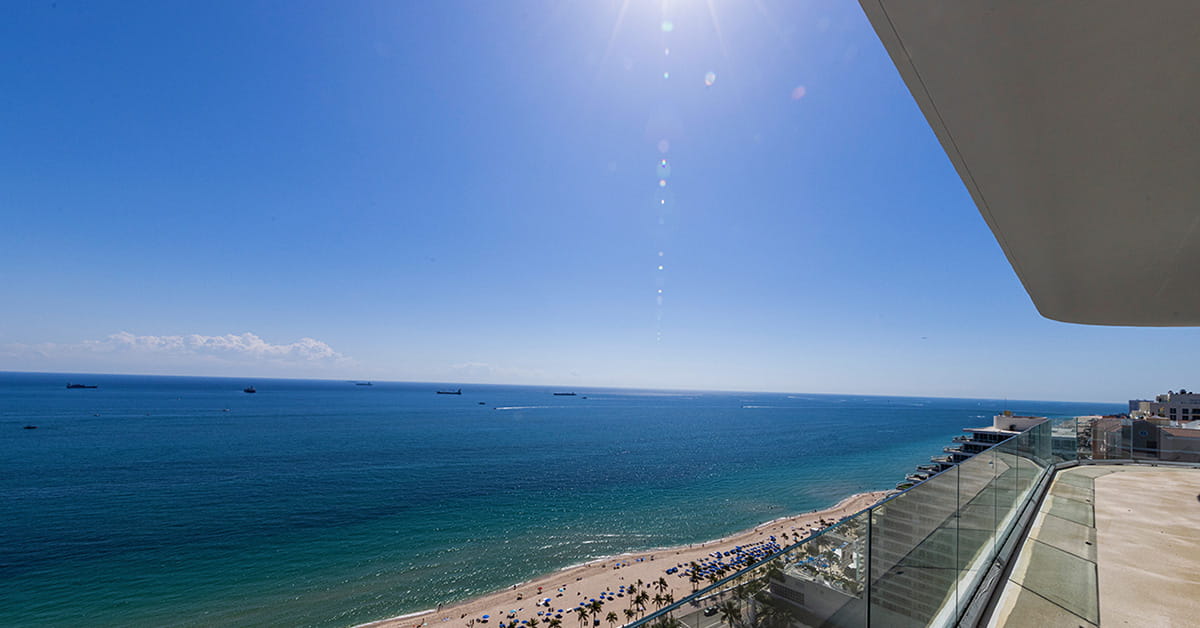
Sailfish Point occupies the southernmost tip of Hutchinson Island, placing its private beach within the same convergence of Atlantic Ocean, St. Lucie Inlet and Indian River Lagoon that defines so much of the area’s geography. The wide shoreline is reserved for members, giving the beach a quieter visual character than more public stretches of coast.
The original guide favors sunrise here, when the Atlantic catches the first light and the beach can be framed with relatively little distraction. Gentle waves and long sightlines create a photograph that is simple on the surface but strongly tied to location. It is also one of the clearest examples of how Sailfish Point’s waterfront setting becomes part of daily club life rather than a distant amenity.
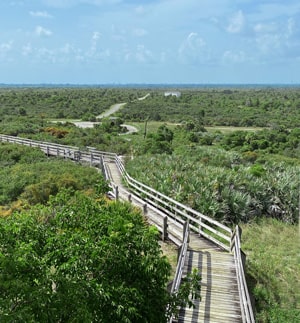
8. Go Higher at Jonathan Dickinson State Park
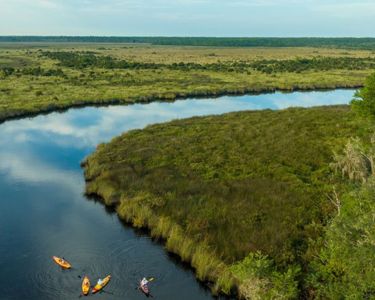
Just south of Stuart in Hobe Sound, Jonathan Dickinson State Park changes the perspective again. Trails, waterways and native habitat create plenty of ground-level subjects, but the signature photo opportunity is Hobe Mountain, the park’s 86-foot observation tower.
From that higher viewpoint, the Indian River and surrounding wilderness spread out across the frame. The original guide recommends sunset and golden light, which can add depth to a landscape that is otherwise defined by large expanses of green and blue. It is the most elevated stop on the list and one of the strongest places to photograph the broader natural setting beyond downtown.
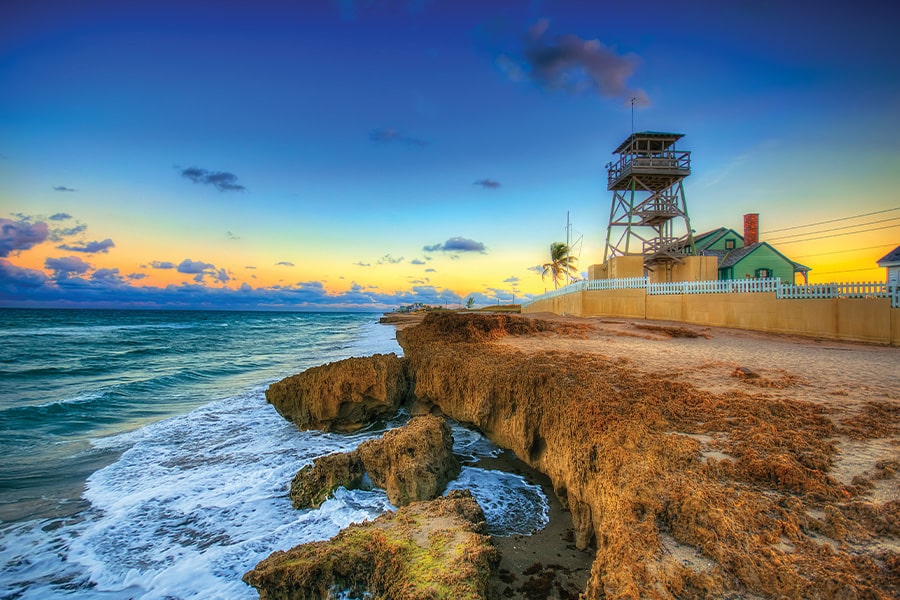
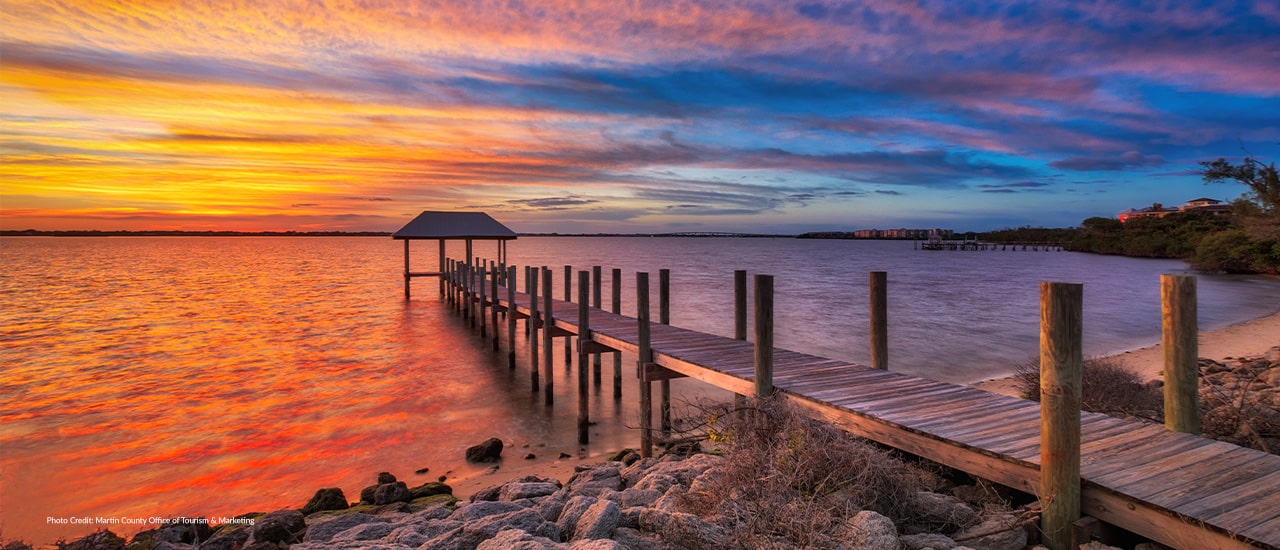
Photo Credit: Martin County Office of Tourism & Marketing
9. Pair Coastal History With Sunrise at the House of Refuge
The House of Refuge brings architecture and shoreline into the same composition. Located just south of Stuart Beach, the historic building is Florida’s oldest surviving structure on the east coast, and its weathered form stands in sharp contrast to the open Atlantic beside it.
The rocky shoreline is a major part of the photograph. At sunrise, the texture of the rocks, the horizon and the historic building can share the frame without competing for attention. For anyone photographing Stuart as a place rather than simply a collection of views, this stop adds a sense of continuity between the region’s coastal history and the landscape around it.
10. End on the “Window to the Sea” at Sailfish Point
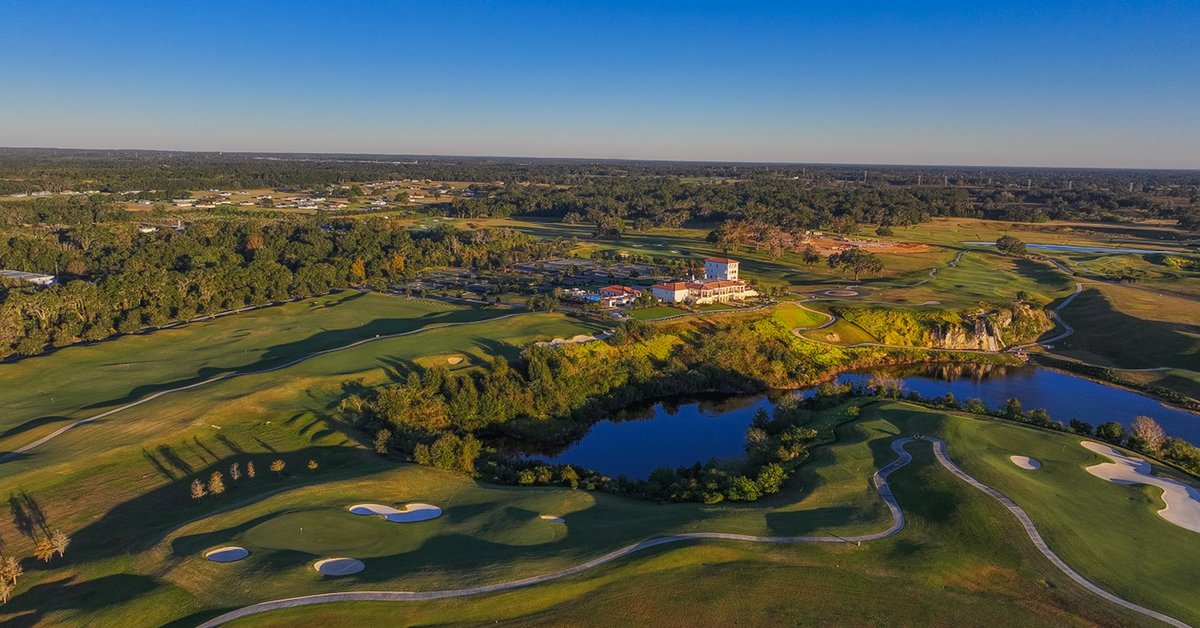
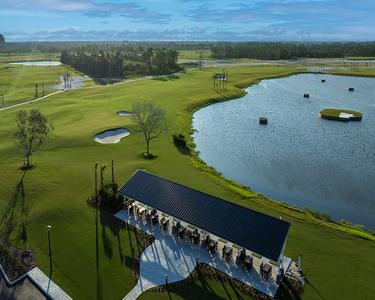
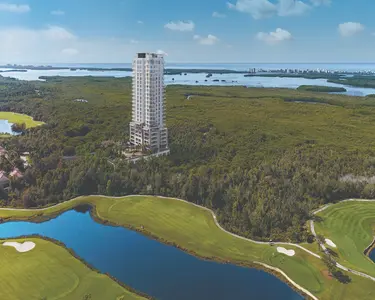
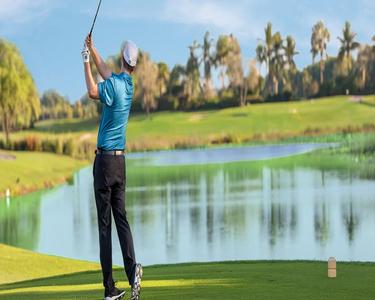
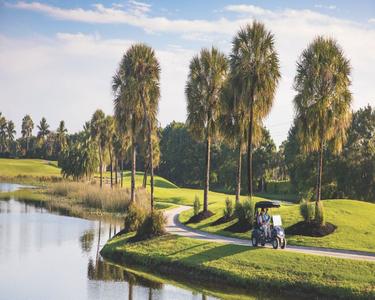
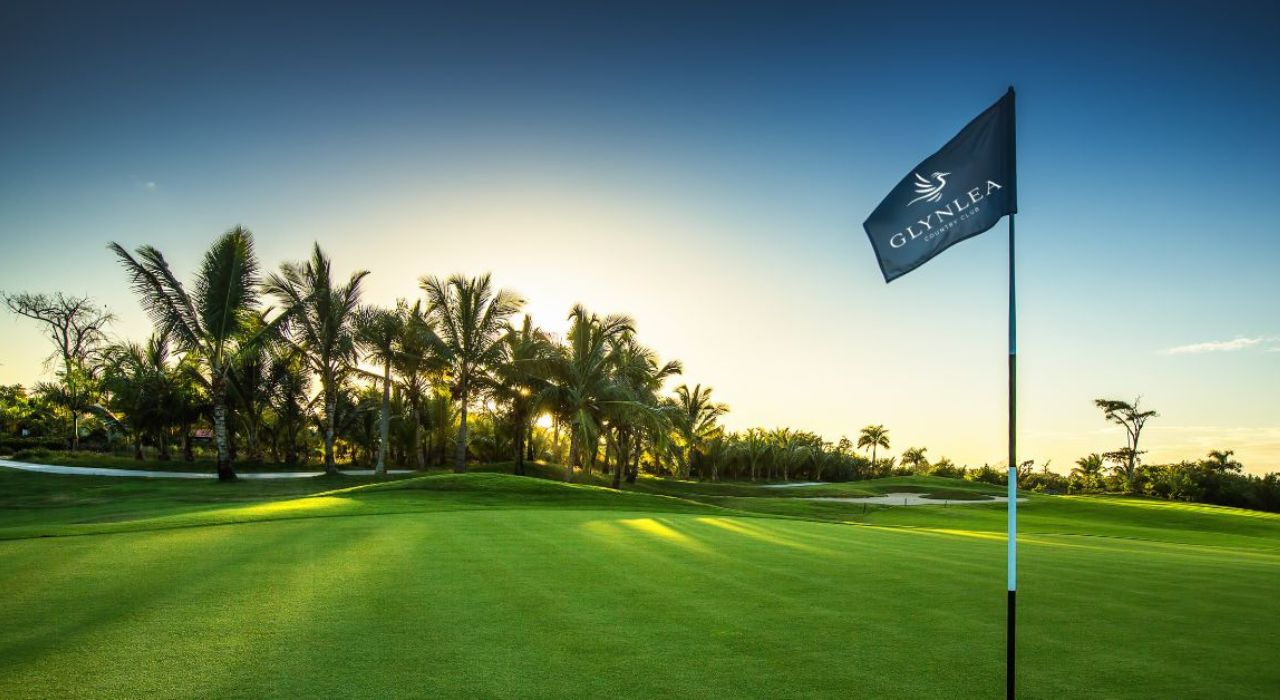
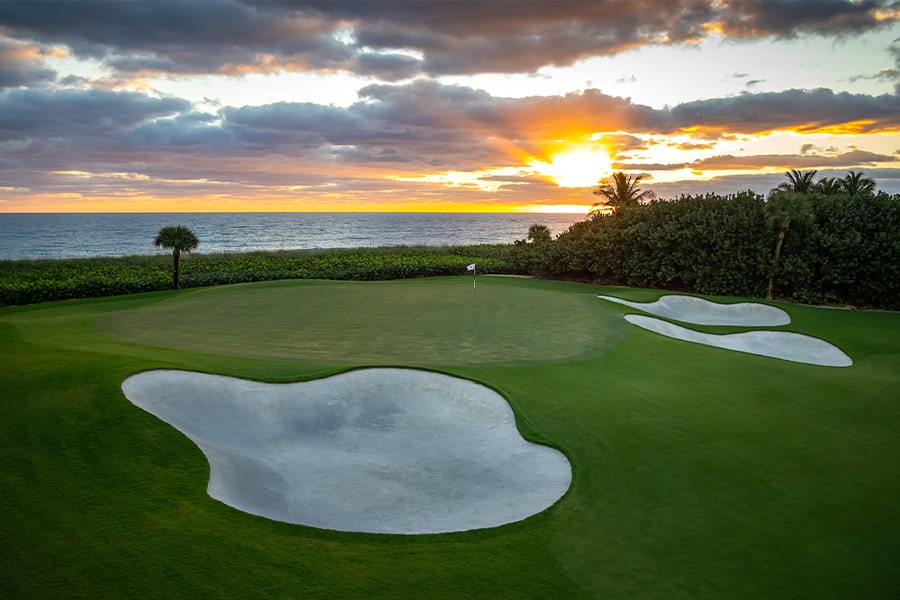
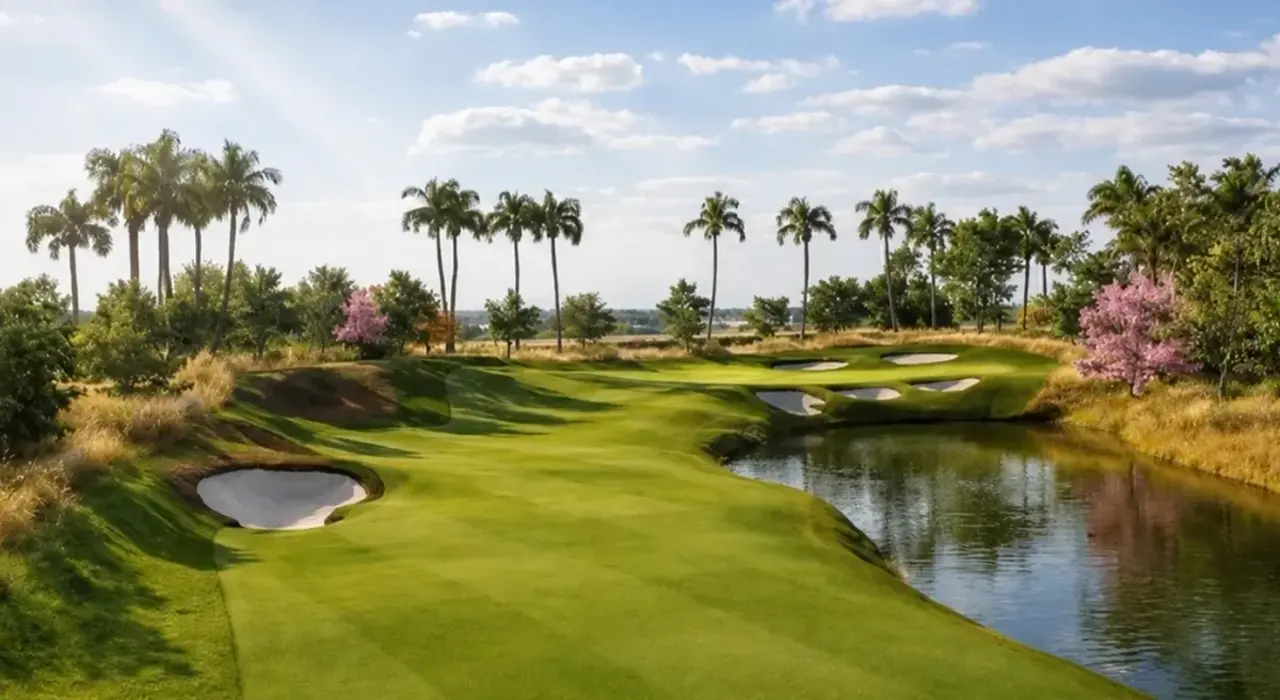
The final stop returns to Sailfish Point, this time on its Jack Nicklaus Signature golf course. The 18th hole is nicknamed the “Window to the Sea,” a name that becomes self-explanatory from the green: the Atlantic sits directly beyond the playing surface, giving the closing hole a horizon that feels unusually open for a golf-course photograph.
The par 4 works visually because the golf architecture and ocean are both clear in the same frame. Bunkers and green shape the foreground while the water carries the eye outward. It is a fitting end to the route because it combines two parts of the Stuart-area story that appear repeatedly throughout the list: designed places and natural water views.
Why Sailfish Point Keeps So Much of the Stuart Story Close
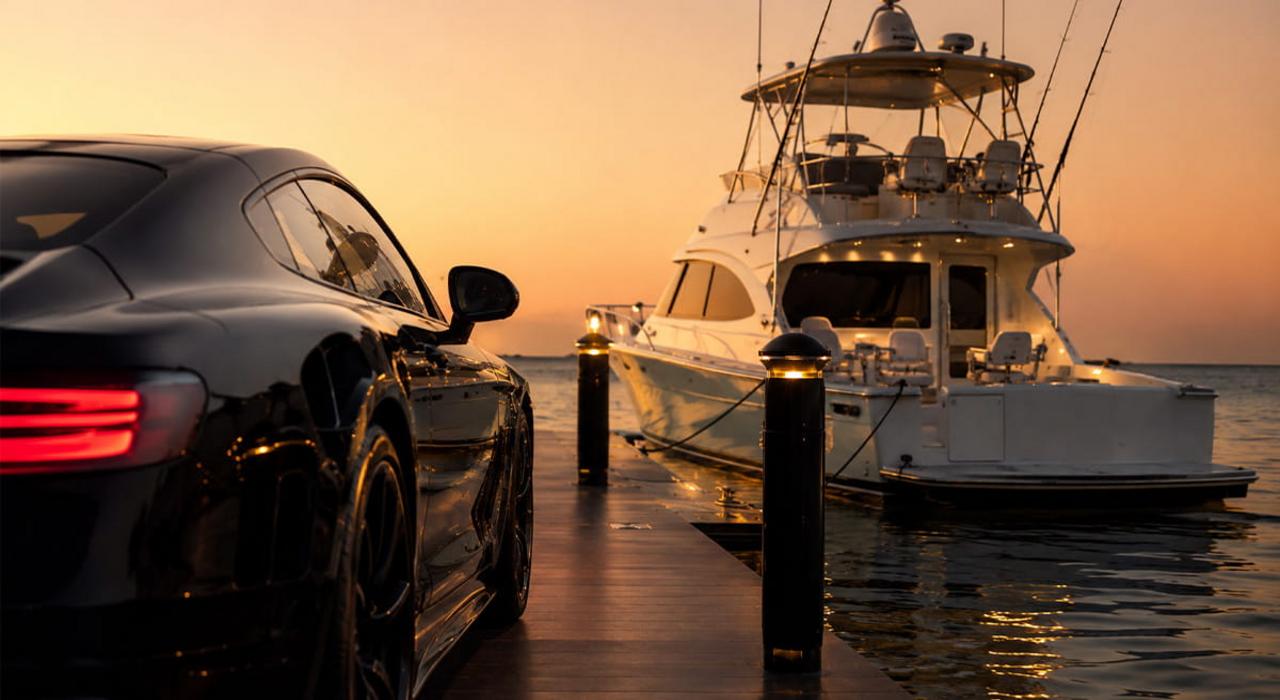
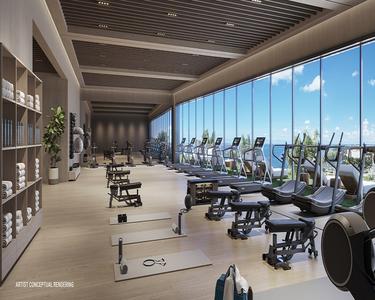
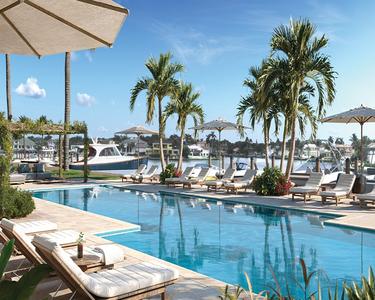
The photo guide ends with Sailfish Point because the community gathers many of the Treasure Coast’s defining elements in one place. Its private marina includes 84 slips for vessels up to 125 feet and 45 dry slips, while the 60,000-square-foot Oceanfront Clubhouse brings dining, the pool and social activity to the Atlantic edge. The source article also notes seven HydroGrid tennis courts, four pickleball courts, a fitness center and a spa offering massages, facials and Salt Therapy.
That combination of ocean, inlet, golf, boating and club amenities is also why Sailfish Point has become a recurring example in Cotton & Company’s work around waterfront and marina-oriented lifestyle communities. The setting is visually distinctive, but the more important point is how closely the pieces connect: a morning on the beach, time on the course, a boat departure and an evening at the Clubhouse can all belong to the same day.
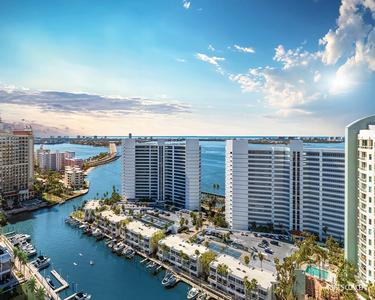
The community includes 520 homes across a range of settings, from beachfront properties and oceanfront condominiums to linkside villas and townhomes with private boat docks. Because individual availability changes, the current Sailfish Point property listings are the appropriate place to review what is on the market. The photography route itself makes a different point: the appeal of living near Stuart is often easiest to understand by looking at how water, history, art and recreation overlap across the landscape.
For a camera, that overlap creates variety. For daily life, it creates proximity. The same morning can begin with Atlantic light and end along the river, while downtown, the inlet and the club community each add a different texture to the larger Stuart story.
Frequently Asked Questions
Where is Sailfish Point in relation to Stuart?
Sailfish Point is located at the southern tip of Hutchinson Island in Stuart, where the Atlantic Ocean, St. Lucie Inlet and Indian River Lagoon converge. It is a private club community with beach, golf, marina and waterfront amenities. Additional first-party details are available in the Sailfish Point FAQ.
Which Stuart photo spots are best around sunrise or sunset?
For sunrise, prioritize the St. Lucie Inlet, Sailfish Point Beach and the House of Refuge. Golden hour is especially effective at the Sailfish Fountain and along the Stuart Riverwalk, while Jonathan Dickinson State Park is well suited to sunset views from Hobe Mountain.
Are the Sailfish Point beach and golf course open to the public?
Sailfish Point is a private club community, so its beach and golf course are club amenities rather than public photo stops. The downtown Stuart landmarks and Jonathan Dickinson State Park sit outside the private community and can be evaluated separately under their own access rules.
What amenities are available at Sailfish Point beyond the photo locations?
The community includes an oceanfront clubhouse, dining, swimming, tennis, pickleball, fitness and wellness facilities, a spa, a full-service marina and the Jack Nicklaus Signature golf course. Those amenities sit alongside the private Atlantic beach and waterfront residential settings that shape the larger Sailfish Point lifestyle.
Destinations

Things To Do


Exclusives
Lifestyle Publication